Layers Before Lounging: The Winter Fit Check Your Garden Seating Needs

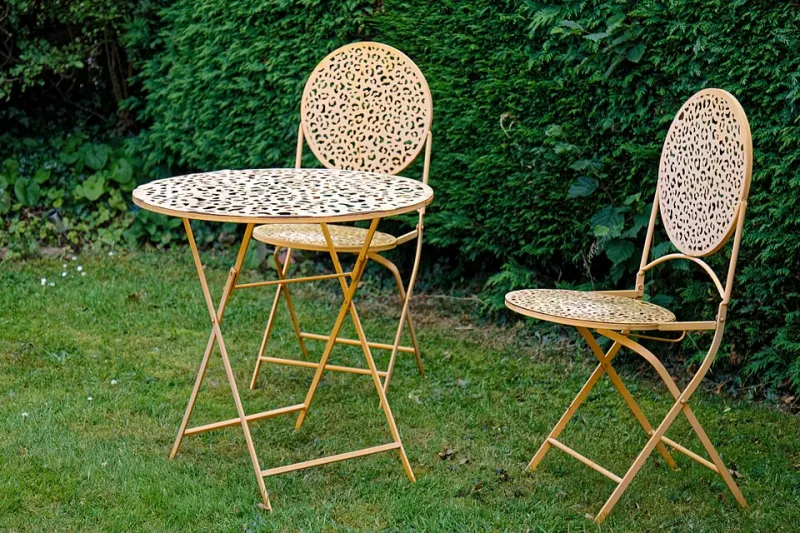
Photo: Tobias ToMar Maier, CC BY-SA 4.0, via Wikimedia Commons
Most garden furniture is chosen in short sleeves. You sit on a sunny Saturday in June, the chair feels roomy, the table seems generous, and you hand over the card. Then November arrives, you zip yourself into a padded coat, wrap a scarf round your neck, and discover that the same chair now grips your shoulders like a dodgy bus seat. Winter comfort is not just about adding a blanket. It is about geometry — and your cold-weather wardrobe changes the geometry rather obviously.
Why a summer chair becomes a winter squeeze
A thick coat adds bulk in three places that matter: behind your back, around your hips and thighs, and along your arms. A puffer jacket can add several centimetres of loft. A scarf adds more at the neck and shoulders. Even a bulky jumper changes how you settle into a seat. The result is that your body sits slightly forward of where it did in July, your knees creep toward the edge of the seat, and armrests that once felt relaxed start pressing on your forearms.
None of this means your furniture is bad. It means it was measured against a summer version of you. The fix is to test the fit in the clothes you actually wear on the patio in winter — not the ones you wore when you bought the set.
The coat-on seat depth test
Sit down with your coat done up and your usual winter trousers on. Slide your bottom back until your shoulders are resting against the backrest — or as close as the coat allows. Now check the gap behind your knees.
You want roughly two to three fingers of space between the back of your knee and the front edge of the seat. Less than that, and the seat edge is digging into your legs. More than that, and you will be perching forward, which is tiring and cold. If you cannot get your back supported without your knees hanging over the edge, the seat is too shallow for winter layering.
Seat depth is the number to know. For most British adults, a garden chair with a seat depth of around 48cm to 52cm works well in summer. Add a proper winter coat and a few extra centimetres of depth become welcome — think 52cm to 55cm for taller frames or particularly bulky jackets. If you are shorter, do not simply chase depth; a seat that is too deep will leave your legs dangling and your back unsupported. The trick is to test with the coat on, not to assume deeper is always better.
A firm lumbar cushion placed low behind your back can help, but avoid stuffing a thick, squashy cushion behind your shoulders. That pushes you forward and undoes the benefit of the seat depth.
Armrests: the quiet troublemakers
Armrests are brilliant in theory and annoying in practice when you are wearing a coat with padded sleeves. The right height is roughly 20cm to 25cm above the seat, so your forearms rest without your shoulders hunching. Too low, and the armrest catches the underside of your jacket. Too high, and you end up shrugging your way through every cup of tea.
Look for armrests with an open front or a gentle slope. Flat, boxy armrests tend to trap coat fabric when you stand up. If your current chairs have this problem, try draping a small fleece or folded blanket over each arm — not as a permanent fix, but as a cheap winter buffer while you decide whether to replace the set.
Table clearance is about knees, not just plates
A garden dining table can feel perfectly spacious until you sit at it in winter boots and thick trousers. Check the clearance from the ground to the underside of the table apron. You want enough room for your thighs and knees to slide under without scraping. If the fit is tight, you will end up sitting sideways or pushing your chair back, which puts your plate at an awkward distance.
For bistro sets and smaller tables, winter layers make everything feel tighter. A practical workaround is to use the dining table for shorter meals and move drinks and snacks to a side table. If you are buying new, look for tables with a high apron or a pedestal base that leaves more legroom. And always sit at the table with your coat on before you commit — showroom sofas get all the attention, but patio tables deserve the same treatment.
Benches need a different conversation
Backless benches are lovely for a quick sit in the sun. In winter, they are harder work. A bulky coat makes it trickier to swing your legs over, and without arms or a back, getting up again can feel like a small gym exercise. If a bench is your main winter seat, consider adding a backrest cushion against a wall or fence, or choosing a bench with arms and a sloped back for the colder months. A firm wedge cushion can also stop you sliding forward in a shiny waterproof.
The two-minute patio audit
Do this before the first hard frost, while you can still be bothered to stand outside with a notebook.
- Put on the coat, scarf and boots you actually wear in the garden in winter.
- Sit in each chair for a full five minutes with a mug of tea. Do not perch — sit back.
- Check your back support, the gap behind your knees, your armrest height and your knee clearance under the table.
- Stand up. Was it easy? If not, note whether the arms, seat height or coat fabric caused the problem.
- Repeat on the bench, the lounger and any folding chairs you keep for visitors.
Little adjustments that make a real difference
You do not always need new furniture. A thin, firm back cushion can improve support without pushing you forward. A footstool helps if your legs feel heavy in a deeper seat. A side table takes the pressure off a tight dining table. Swapping a thick scarf for a closer-fitting neck warmer is not just a fashion choice — it stops your coat collar fighting the chair back.
If you are buying new garden seating for year-round use, wear your winter coat to the garden centre. Sit on the chair, not just beside it. Look for seat depths around 50cm to 55cm, armrests that are open at the front, and tables with generous clearance underneath. Removable, quick-drying cushions are easier to keep dry, and a slightly reclined backrest is more forgiving when you are wrapped up.
Winter is not the season to be noble about discomfort. A few centimetres of seat depth and a sensible armrest height are the difference between a patio you use from October to March and one you admire from behind the glass. Test the fit now, while there is still time to shuffle the furniture around before the frost settles in.