Warm Bottoms, Cool Heads: The Real Case for Heated Garden Chairs
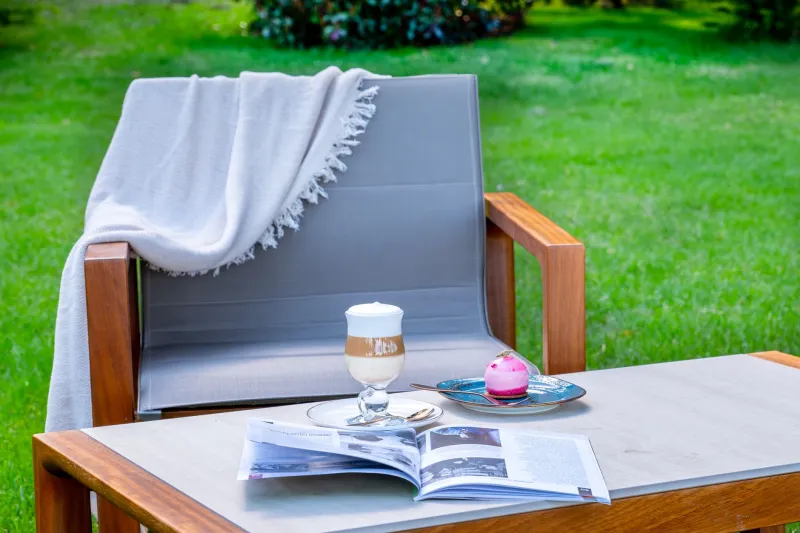
There is a particular November evening in Britain when the patio is still just about usable but the air has turned sharp. You want twenty more minutes outside, not a full-scale relocation to the sofa. Cue the adverts for heated garden chairs, warmed cushions and outdoor blankets, all promising to take the sting out of the season. They can work. They can also be an expensive way to discover that your patio is windier than you remembered.
This is not a rants-about-modernity piece. A heated seat is a genuinely nice thing on a still, cold night. But it is furniture with a plug, and that changes the buying decision. Before you spend £150 on a chair that needs charging, or £80 on a blanket that may not survive a wet weekend, it is worth doing the comfort maths.
What you are actually buying
The category is broader than it looks. There are chairs with heating elements built into the seat and back, usually mains-powered or running from a removable battery pack. There are heated cushions that strap onto existing furniture, which is the cheaper route if you already like your chairs. And there are outdoor blankets, some mains-powered, some USB battery packs, some little more than a fleece with a warm patch.
The important labels are not the ones shouting about luxury. Look for an IP rating that matches outdoor use — IPX4 or better for splashes — and a proper UK plug or a reputable battery system. A heated blanket sold for indoor sofa use is not automatically a patio blanket. Mains power usually gives steadier, stronger heat; batteries are more portable but often milder and need charging indoors. Neither is wrong, but they are different products.
The comfort test: where the warmth actually lands
Heated garden seating does not warm the air around you. It warms the bits of you in contact with it. That is a crucial difference on a British patio, where a light breeze can undo the good work in seconds. A heated seat is pleasant; a heated backrest is better. A blanket that traps warmth around your legs is often the most effective single purchase, because it deals with the cold that makes people retreat indoors first.
Damp is the other British complication. A dry cushion on a dry chair feels warmer than a slightly clammy one, heated or not. If your furniture lives outside under a cover, give the seat a wipe and let it air before switching anything on. No heating element is designed to dry out a soaked cushion, and you should not use one that way.
Running the numbers without flinching
Here is where heated seating gets an unfairly bad reputation. A typical heated chair might draw 40 to 60 watts; a heated blanket around 80 to 100 watts. At an illustrative 25p per kilowatt hour, a 60-watt chair used for three hours costs about 4.5p. Four chairs for the same evening comes to roughly 18p. Even over a hundred evenings, that is £18, not a second mortgage.
But the arithmetic depends on the kit and the habits. Older or cheaper models can draw more. Leave a chair switched on all afternoon and the pennies add up. Battery packs cost little to recharge but may not last a whole long evening at full heat. Use the timer if there is one, switch off when you go in, and treat heating as a supplement to a windbreak and a decent throw rather than a patio-wide heating system. Compared with a hot-water bottle, it is more expensive; compared with installing a patio heater, it is usually much cheaper to run.
Safety: the bit that matters more than warmth
Any electrical item outdoors deserves respect. Use an outdoor socket protected by an RCD, or a proper outdoor-rated extension lead fully uncoiled. Do not run an indoor reel extension across wet paving. Check cables and plugs before each season, and stop using anything with damage, a loose connection or a suspiciously warm plug.
Follow the instructions about covers and cushions. Do not bury a heated blanket under other layers or trap it against a heater. Keep pets from chewing cables, and do not leave children unattended with battery packs or controls. Unplug and bring powered items inside when you have finished; they are not outdoor fixtures. Look for UKCA or CE marking and buy from sellers who can explain the product, not just photograph it beside a mug of cocoa. Marketplace bargains with vague plugs and no instructions are a false economy.
Storage, cleaning and the November reality
Heated furniture is still furniture, and it takes up space. Cushions with elements inside are rarely machine-washable in the way a plain cover is. Check the care label before buying, because spot cleaning only is common. Cables, controllers and battery packs need somewhere dry. A damp shed is not ideal storage for electronics, even in a box.
This is the hidden cost: indoor space. If you have a boot room or a dry garage shelf, fine. If the only place for four heated chairs is a crowded cupboard, you will resent them by January. Covers help against dust and drizzle, but they do not turn a wet patio into a dry store.
Who should buy in
Heated seating makes most sense on a small, sheltered patio or balcony that you use often. If you have an outdoor socket, somewhere dry to store the kit, and a genuine habit of sitting out in October and March, one heated chair or a good outdoor blanket can extend the season nicely. It is also a sensible treat for anyone who feels the cold badly and wants to keep pottering outside, provided they are happy with the safety checks.
It suits people who already have decent furniture and want to add warmth, not replace a whole set. One heated blanket draped over a bench can do more for a household than four gimmicky chairs.
Who should skip
Be sceptical if your patio is exposed and windy, if you sit out only a handful of times a year, or if you have nowhere dry to store electronics. A large set of heated chairs is rarely worth it; heating six seats for two actual users is an expensive way to warm empty cushions. If money is tight, spend it first on a windbreak, dry cushions, a decent throw and a hot-water bottle. Those do not need charging.
A sensible middle path
Buy one piece first. A heated blanket or a single heated chair will tell you whether the habit sticks. Check the IP rating, the warranty, the cable length and the care instructions. Use a timer, keep it dry, and pair it with the unglamorous basics: a sheltered corner, a wool throw and a flask. Heated garden seating is a small luxury, not a weather system. If it gets you outside for a frosty half-hour in February, it has earned its plug. If it lives in the shed by New Year, you have your answer.