The Tilted Patio Playbook: Garden Furniture That Behaves on a Slope
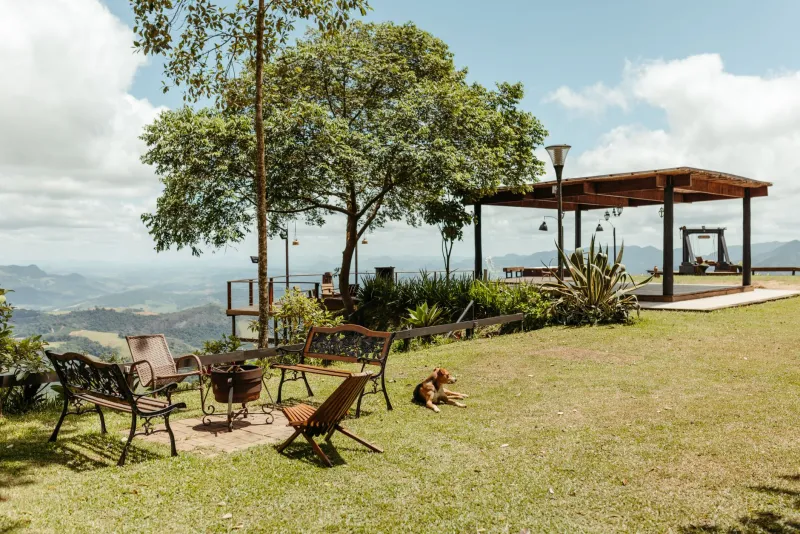
Most British patios are not flat. They are not meant to be. A gentle fall away from the house keeps rainwater moving towards a drain or lawn instead of pooling against the back door. The trouble starts when that sensible drainage slope meets a four-legged dining set and a stack of mismatched chairs. Suddenly every cup of tea comes with a slight lean, and every meal out involves a quiet game of who gets the wobbling seat.
A sloping patio is not a defect. It is just a site condition. Treat it like one, and you can choose furniture that sits calmly, stop the daily rocking, and even use the change in level to make the garden feel more considered.
First, work out what sort of slope you actually have
Before you buy anything, measure the fall. You do not need a surveyor. A one-metre spirit level and a ruler will do, or a phone level app if you trust it and can hold it still.
Place the level along the patio in the direction the ground appears to drop. Lift the downhill end until the bubble sits in the middle, then measure the gap between the bottom of the level and the patio surface. A 10mm gap over one metre is roughly a 1:100 fall. A 20mm gap is about 1:50. Most patio falls for drainage sit somewhere between 1:60 and 1:80, which is mild but still enough to make cheap chairs fidget.
Repeat the measurement in the other direction, because a patio can fall away from the house and also drift slightly to one side. Note any dips, raised paving edges, or soft spots where the ground has settled. Those local bumps often cause more wobble than the overall gradient.
As a rule of thumb: a fall of 1:80 or gentler is easy to live with. Around 1:40 to 1:20, you will want furniture with adjustable feet and a plan for the worst spots. Steeper than 1:20, stop trying to shim every leg and think about creating a level zone.
Furniture that copes without constant fiddling
The best garden furniture for a sloping patio is not necessarily the most expensive. It is the furniture that gives you a way to correct the difference between one leg and another.
Look for chairs and tables with adjustable glides or threaded feet. These are small screw-in feet that can be wound up or down by a few millimetres. They are common on better metal frames and some timber sets, and they are worth more on a sloped patio than a fancy cushion package.
Wide feet spread weight and grip better than tiny metal caps. Four legs with a broad stance are usually more stable than a narrow, tall design. Avoid castors unless you genuinely need to wheel furniture around; castors on a slope have a mind of their own. Sled-style bases can work, but check that the frame does not rock on the high point of the paving.
For dining tables, a sturdy four-leg design with adjustable feet is easier to settle than a heavy pedestal base on an uneven surface. If you are choosing between two similar sets, pick the one with a slightly lower centre of gravity and feet you can actually reach without turning the whole table upside down.
Timber furniture can be trimmed, but do not start sawing legs in the garden. It is rarely neat and it voids the finish. Buy adjustable feet, or choose a set that already has them.
The wobble fix that does not look like a pub hack
Folded beer mats, old tiles, and random bits of slate are not a long-term solution. They compress, slip, and look exactly like what they are.
Use rubber patio pads or composite shims instead. Identify the leg that lifts when you press down on the opposite corner. Slide a shim under the lifting foot, then sit on the chair or lean on the table to check the result. If it still rocks, adjust by a millimetre rather than adding another layer. One shim in the right place is better than four in the wrong ones.
For chairs, check the feet after rain and after the first frost. Timber can swell, metal can settle, and rubber can harden. A five-minute check in November 2026 will save you a winter of annoying little movements.
If a table or chair still refuses to settle, move it to a flatter part of the patio. There is no prize for winning a fight with a paving slab.
When to build a level zone
If the slope is steep, or if you use a dining table most days, create a small level platform rather than fighting the gradient. This does not have to mean a full landscaping job.
Interlocking decking tiles on adjustable pedestals can give you a flat seating area over existing paving. A simple timber deck with a slight step is another option, provided it does not block drainage or create a trip hazard. For renters, freestanding deck tiles are the least permanent route.
Do not just put bricks under one side of a table and call it done. That is how furniture ends up stressed, unstable, and dangerous when someone leans on it. Use proper adjustable supports, and keep the drainage path clear so water still has somewhere to go.
Make the slope part of the design
A change in level can be an asset. Instead of forcing one flat seating area, use the slope to create two gentle zones: a higher spot for morning coffee and a lower area for dining or a fire bowl. Arrange seating along the contour of the patio rather than fighting it. A low retaining sleeper, a gravel margin, or a line of planted pots can mark the change without making the garden feel chopped up.
Planters are useful on slopes. A heavy pot at the downhill edge can act as a visual anchor, and a run of pots can disguise small changes in level. Keep steps and level changes obvious, especially in low evening light, and avoid loose rugs on a gradient unless they are properly gripped.
A quick checklist before you pay
Measure the fall in two directions. Choose furniture with adjustable feet. Avoid castors and spindly legs. Budget for rubber pads or composite shims. Decide whether you need a small level platform. Check the return policy before ordering online, because a set that looks steady in a showroom may behave differently on your patio.
A sloping British patio is normal. With the right furniture and a little patience, it can stop being a daily annoyance and start being the reason your garden has a bit more character than next door's perfectly flat rectangle.