Glow Without the Ghost: Decorating Garden Furniture for Dark November Evenings
Photo: Andrew Curtis , CC BY-SA 2.0, via Wikimedia Commons
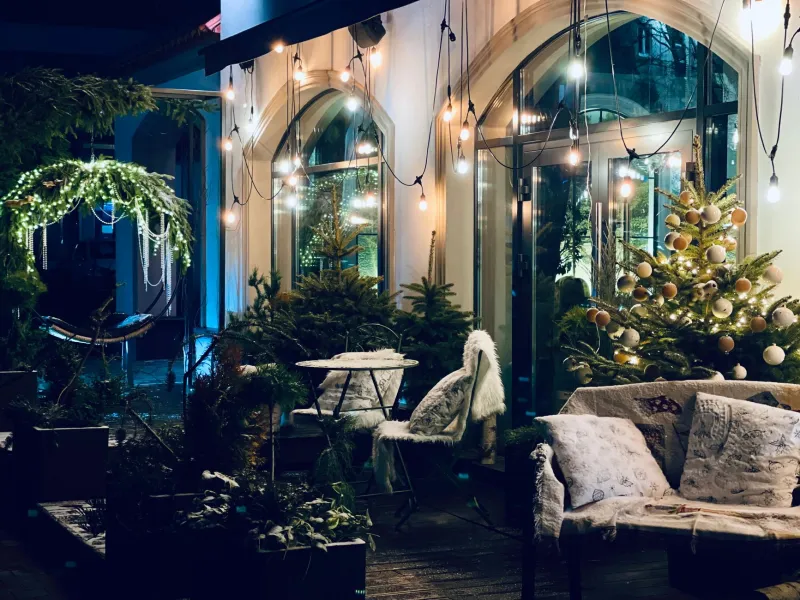
By mid-November, the patio has usually gone quiet. The chairs are still there, the table is still holding its own against the weather, but the whole space starts to feel like a place you pass rather than a place you sit. A string of fairy lights and a warm drink can change that in an afternoon. The trouble is that decorations are not always kind to garden furniture. Hot jars leave pale rings on wood, metal lanterns bleed rust onto paint, and sticky hooks take a little of the finish with them when they come off.
The aim is a scheme that looks generous in December and disappears cleanly in January. Not a permanent installation, not a craft project that has to be chiselled off the table, just a bit of seasonal dressing that respects the materials underneath.
Start with the surface, not the sparkle
Garden furniture is a broad church. Powder-coated aluminium, oiled teak, acacia, resin wicker, glass, painted steel and plastic all behave differently when you put lights, candles and hot drinks near them. The common rule is simple: nothing hot goes directly onto the furniture, and nothing rough or metallic sits on a finish for weeks on end.
Powder-coated metal is tough but not invincible. A metal lantern base dragged across a table can leave a grey scuff, and a hot mug can soften or mark the coating. Oiled wood is more forgiving but hates heat and standing water; that white ring under a mulled wine jar is moisture and heat getting into the grain. Glass tabletops look lovely with candles until someone puts a hot dish or jar straight down and the thermal shock does its worst. Resin wicker can soften near a real flame and trap crumbs and wax in the weave.
Build in a few small landing pads before anything else. Cork mats, felt pads, ceramic tiles and wooden boards all work. For lanterns, choose a base with cork or rubber rather than bare metal. A metal-on-metal arrangement outdoors is basically an invitation to rust, especially once condensation gets involved.
Fairy lights: tie, clip, never glue
Battery-powered LED fairy lights are the sensible choice for furniture. They run cool, they do not need a outdoor socket, and you can move them around without rewiring the garden. If you are using mains lights, make sure they are genuinely outdoor-rated, plug them into an RCD-protected socket, and keep transformers indoors or in a weatherproof box raised off the ground. November rain will find the weakest connection.
Attachment is where most damage happens. Avoid sticky hooks and adhesive clips on oiled wood, painted metal and varnished surfaces. They can leave a gummy patch, lift a little finish, or fail in the cold and drop the lights onto the table. Cable ties are better: loop them loosely around chair arms and table legs, then trim the tail neatly. Velcro straps are kinder and easier to remove. Small clips can work on some frames, but line metal clips with a bit of electrical tape first.
Do not wrap lights tightly around joints, moving parts or cushions. Keep the cable off the ground where possible, and make sure water cannot run down the wire into a connector. A loose drape along the back of a bench or across a pergola looks better than a tight spiral anyway. Think of it as lighting the furniture, not binding it.
Garlands that do not dye, scratch or shed
Artificial garlands are convenient, but the wire ends can scratch a tabletop and the glitter will migrate everywhere. Bend the wire ends inward or cover them with tape before the garland goes anywhere near a surface. Ribbon ties around a frame are gentler than twisting wire through the furniture.
Real greenery looks wonderful for a few days, but sap, damp and needle drop are real. If you are using ivy, bay or offcuts from the garden, put a sacrificial layer between the greenery and the furniture or keep it in a container rather than draped directly on the wood. Avoid anything that sheds glitter onto cushions; you will still be finding it in July.
The hot jar problem
Mulled wine in a glass jar is a lovely idea and a reliable way to leave a ring on a teak table. Glass gets hot, condensation forms, and sugar syrup finds every tiny gap in the finish. Use a thick ceramic mug where you can, or stand the jar on a coaster or a wooden board. A tray with cork feet is ideal because it catches drips and keeps everything stable.
Keep hot drinks off chair arms and away from the edges of tables. A small side table or a sturdy tray on the patio is safer than balancing a jar on a wicker armrest. If you are using a glass table, treat it like a kitchen worktop: use a trivet, not a tea towel, and never put a hot pan or jar straight down.
Candles, lanterns and the rust ring
Real candles bring soot and wax, and they are a poor mix with dry garlands, resin furniture and a bit of winter breeze. LED candles give you most of the atmosphere without the risk. If you do use real ones, keep them in a glass hurricane on a stable tray, well away from foliage and soft furnishings.
Lantern bases are a common source of rust rings. Water sits underneath, the metal starts to bloom, and the next thing you know there is an orange halo on the table. Empty lanterns after rain, dry the base, and stand them on cork or rubber rather than directly on wood or paint.
Plan the January exit now
A good winter scheme is designed backwards. Use removable fixings, ribbons and clips rather than adhesive, spray snow or glitter glue. Take a photo of how the lights are draped so you can recreate it next year without guessing. Label the box and keep the cable ties, spare bulbs and a small cloth together.
When the decorations come down, clean and dry everything before it goes back into storage. Wipe the furniture, check for rings or rust marks, and treat anything that needs attention while you still remember what caused it. The best decoration is the one that leaves no evidence — just a patio that looked warm and welcoming for a few dark weeks, and furniture that is ready for the garden again when the light comes back.